
Artificial Intelligence (AI)
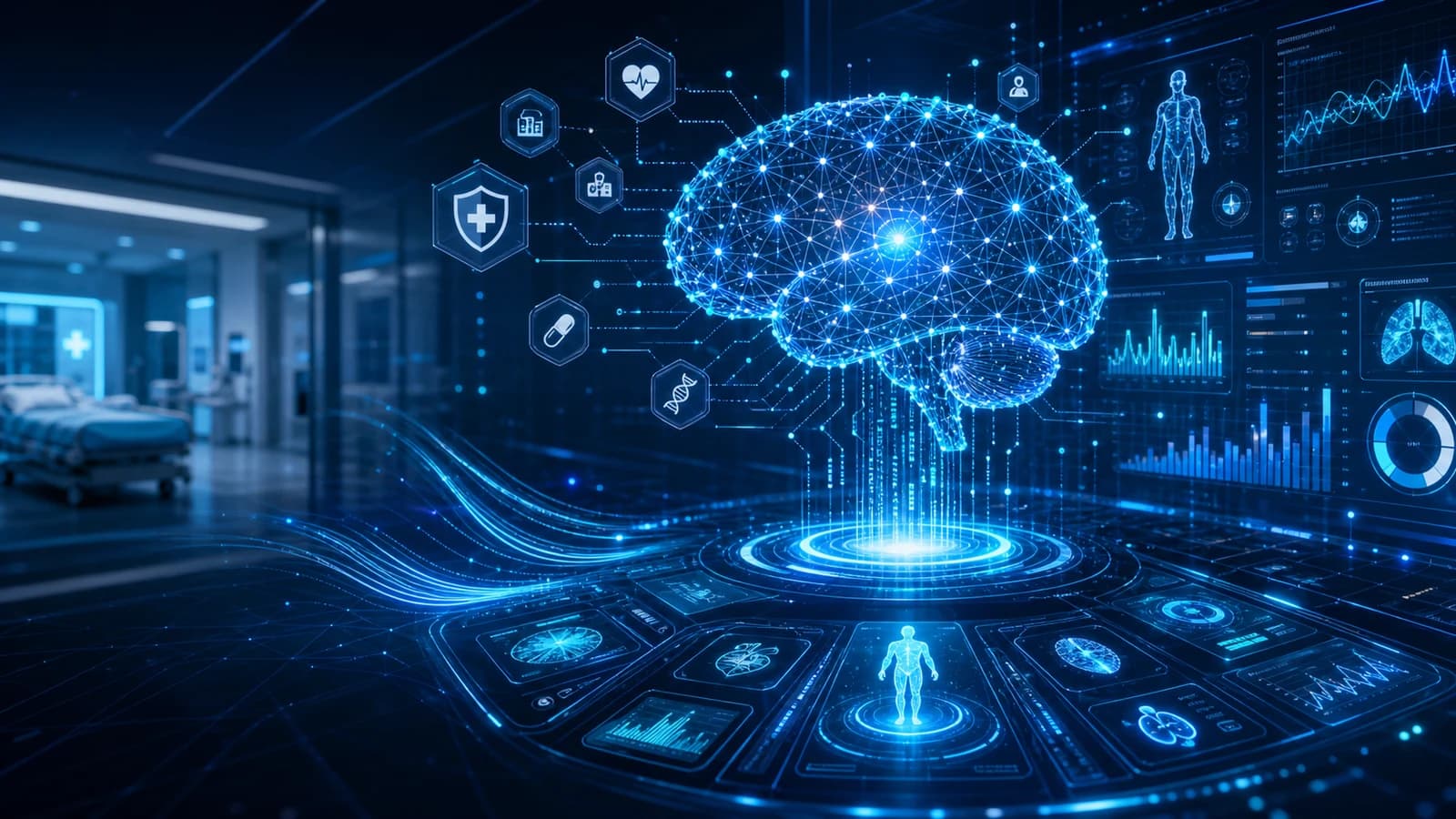
Artificial intelligence transforms clinical and operational data into insights, providing decision support, anomaly detection, and automation.
What is Artificial Intelligence (AI)?
Artificial intelligence (AI) is a technology that enables computer systems to develop thinking, learning, and problem-solving abilities similar to human intelligence. AI learns from large data sets and uses algorithms and statistical models to perform specific tasks. In the healthcare sector, applications of AI include obtaining insights by analyzing clinical and operational data, creating decision support systems, performing anomaly detection, and providing automation.
Importance and Benefits for Healthcare Institutions
Artificial intelligence is critically important for healthcare institutions in many ways:
- Decision Support: AI provides information that enables doctors to make more accurate and faster decisions about patient conditions. This accelerates diagnosis processes and optimizes treatment methods.
- Anomaly Detection: AI systems are highly effective in detecting anomalies in large data sets. This helps in recognizing diseases at an early stage and improves treatment processes.
- Automation: Automating routine tasks allows healthcare personnel to focus on more complex duties. This increases efficiency and reduces human error.
- Cost Effectiveness: AI applications can help reduce the costs of healthcare services. Better resource management and process optimization minimize unnecessary expenses.
Applications and Technical Approaches
Applications of AI in healthcare involve several different technical approaches and components:
- Machine Learning: Analyzing data and creating models using learning algorithms is fundamental to machine learning. These models are used in diagnosing diseases or determining treatment processes.
- Natural Language Processing (NLP): NLP, used to analyze text data from patients' medical records, plays an important role in clinical decision support systems.
- Image Recognition: The analysis of radiological images can be performed more quickly and accurately using AI. This is critical for the early detection of diseases such as cancer.
Points to Consider and Risks
There are some important points and potential risks to consider when using artificial intelligence applications in the healthcare sector:
- Data Security: Healthcare data is extremely sensitive. The security of AI systems and the protection of this data are critically important.
- Incorrect Results: AI systems can produce erroneous results if fed with incorrect data. This can lead to misdiagnosis and incorrect treatment processes.
- Ethical Issues: The ethical dimensions of artificial intelligence applications include issues such as data usage and patient privacy. Therefore, applications must comply with ethical standards.
Conclusion
Artificial intelligence is providing a revolutionary transformation in the healthcare sector, offering benefits across a wide range from clinical decision support systems to anomaly detection and automation. The adoption of this technology by healthcare institutions will improve patient care and increase operational efficiency. As hbys.pro, we aim to contribute to the future of healthcare by offering an innovative approach with our artificial intelligence solutions.
Looking for a partner in your health software journey?
Meet the right expert in the area you need.