
Multi-Hospital Group Management
Central management and comparative analysis of group/chain hospitals.
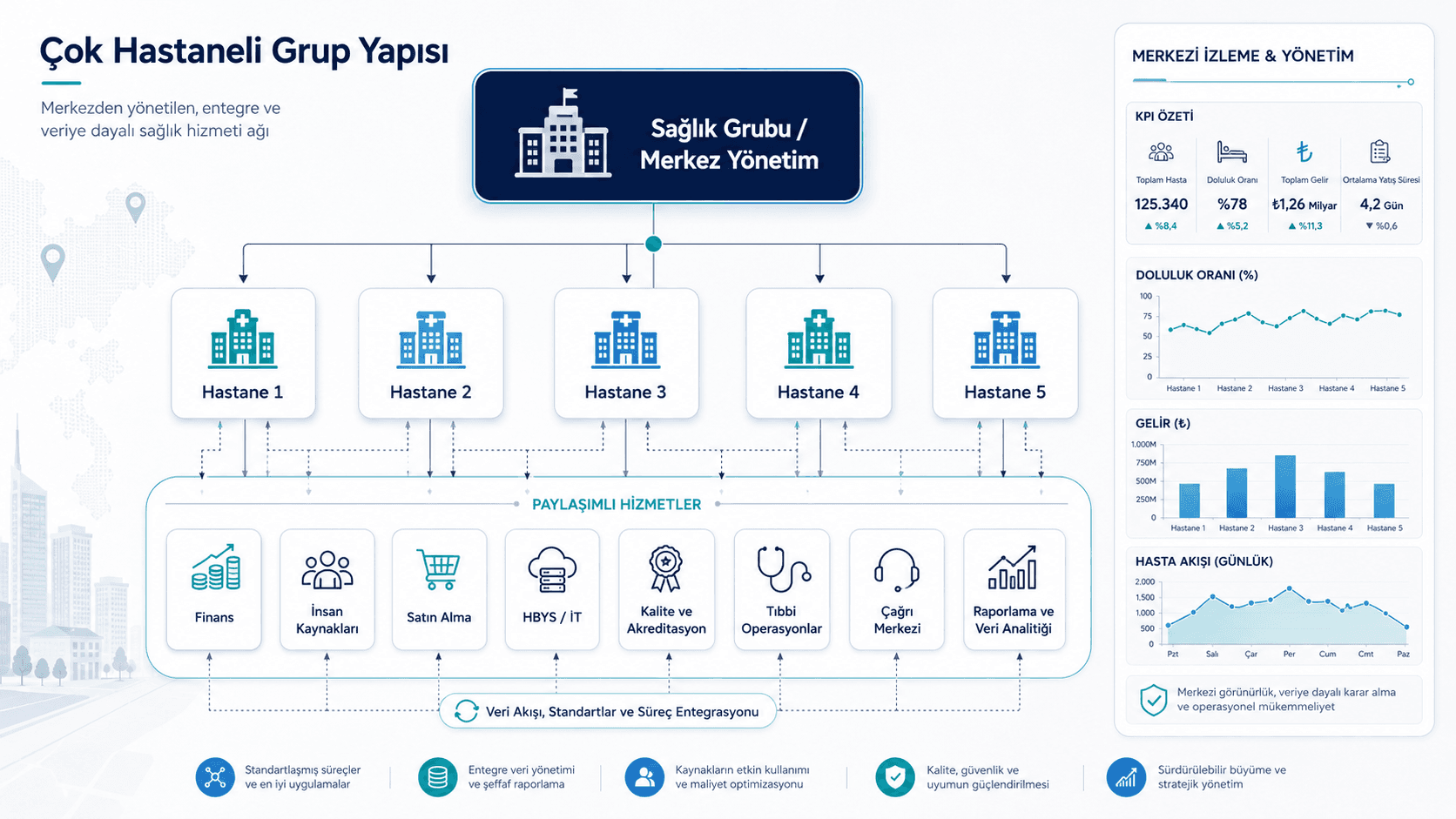
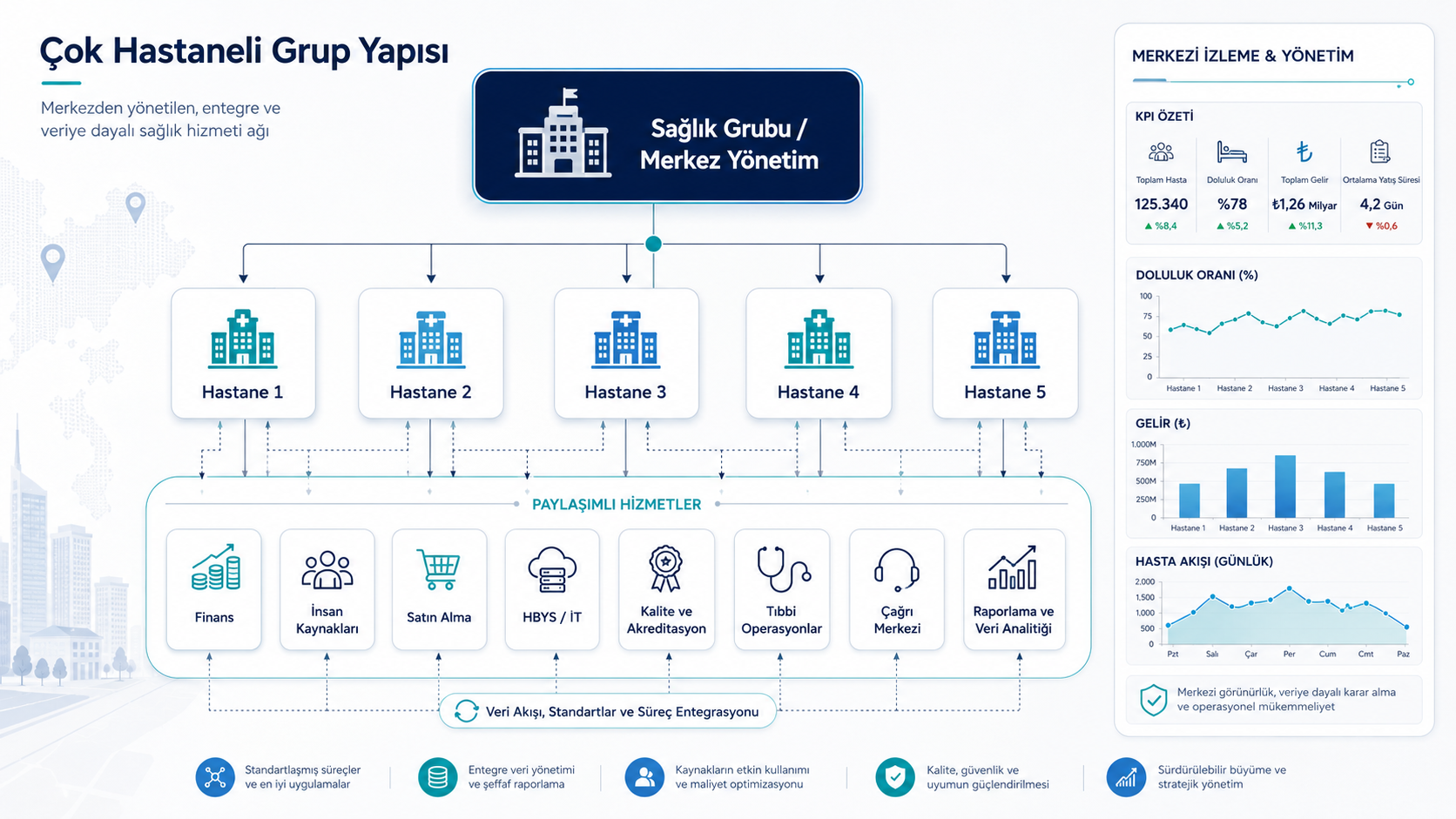
Multi-Hospital Group Management
Multi-hospital group management refers to the administration of multiple hospitals under a single roof with a centralized management approach. This structure has been developed to enhance the effectiveness of healthcare services, control costs, and ensure better service for patients. Healthcare institutions can utilize resources more efficiently and improve service quality by adopting such a management model.
Why is it Important for Healthcare Institutions?
Multi-hospital group management offers numerous advantages to healthcare institutions:
- Resource Management: Centralized management ensures effective distribution of resources. Thus, resources are used fairly according to the needs of each hospital.
- Cost Control: Joint procurement processes and centralized administration make it possible to reduce costs.
- Service Quality: Standardization can enhance service quality among hospitals. This positively affects patient satisfaction as well.
- Increased Efficiency: Optimizing business processes increases the operational efficiency of hospitals.
Implementation/Technical Approach and Components
Multi-hospital group management applications involve various technical approaches and components:
- Central Information Systems: A robust information system is required for the integrated management of all hospitals. This system performs data collection, analysis, and reporting functions.
- Communication Networks: Secure and fast communication networks should be established to facilitate communication and information sharing between hospitals.
- Common Protocols: Common protocols should be developed for the standardization of clinical processes. This helps improve service quality.
- Performance Monitoring: Specific criteria and metrics should be established to monitor and evaluate the performance of hospitals.
Points to Consider and Risks
Some important points and risks to consider in multi-hospital group management include:
- Data Security: The security of centralized systems is critical for the protection of patient data. Measures should be taken against data leaks.
- Cultural Differences: The cultural structures of different hospitals may create challenges in the centralized management process. Therefore, the needs of local administrations should also be taken into account.
- Change Management: A careful change management strategy should be developed during the integration of new systems and the adaptation of employees to new processes.
- Financial Risks: The costs of the centralization process may lead to unexpected financial obligations. Therefore, financial planning should be done carefully.
Conclusion
Multi-hospital group management is an effective method for improving the quality of healthcare services and reducing costs. With centralized management, resources can be used more efficiently, while patient satisfaction can also be increased. However, the points to consider and potential risks in this process should be taken into account. hbys.pro continues to support healthcare institutions with innovative solutions in this field.
Looking for a partner in your health software journey?
Meet the right expert in the area you need.